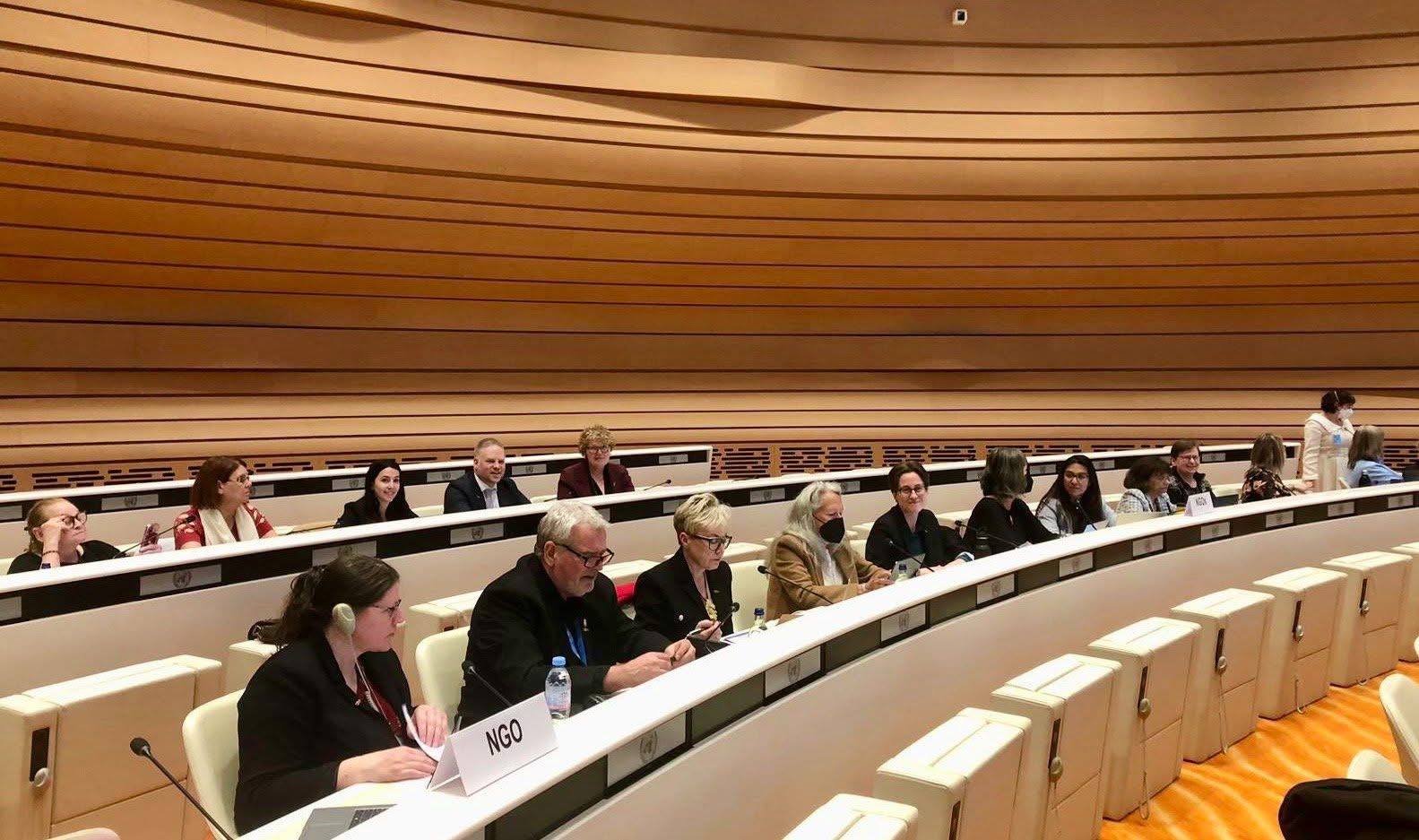
From March 15-19 BC Complex Kids Society board chair, Brenda Lenahan, travelled to the United Nations office in Geneva, Switzerland to join a diverse and strong group of advocates from across Canada to support the review of the Government of Canada’s progress on upholding the rights of people with disabilities.
Previous to the trip, a coalition of 53 civil society organizations from across Canada came together to collectively write a report that reflected a consensus of concerns and incorporated perspectives from a variety of disability communities.Brenda was honoured to join 14 of those coalition organizations in Geneva, where they had a chance to speak at a private briefing session with the Committee on the RIghts of Persons with Disabilities Committee before they began the constructive dialogue with Canada. This committee is a body of independent experts that monitors implementation by Canada and other global signatories to the UN Convention on the Rights of Persons with Disabilities.
In that session, Brenda shared about the lived experience of families like hers from across the country and spoke about the lack of adequate family support across Canada that too often leads families to surrender their children to government care.
A few weeks later, the UN Committee on the Rights of Persons with Disabilities released their Concluding Observations which are the recommendations of the committee to the Government of Canada.
Notable recommendations related to children and youth include:
Mainstream the rights of children with disabilities into all its laws at all levels of government (specifically including Bill C 35 on early learning and child care).
Adopt policy measures to ensure adequate support for families to prevent the separation of children from their families, based on the child or parents disability.
Establish a national inclusive education action plan.
Ensure national consistency in access and funding for habilitation and rehabilitation (including therapy and assistive devices) with a focus on expediting, streamlining and individualizing support and community inclusion.
Ensure all disability entitlements (ie federal Child Disability Benefit) support an adequate standard of living and alleviate poverty for persons with disabilities.
Review decisions to restrict eligible supports covered under Jordan’s Principle, reconsider plans to defund the Inuit Child First Initiative, ensure that First Nations and Inuit children with disabilities receive adequate and timely support, and establish an equivalent programme for Métis children with disabilities.
Read the full version of the Concluding Observations here: